Schengen Passport Validity: The 10-Year Issue-Date Test and Three-Month Rule
For a short Schengen visit, a non-EU traveller’s passport generally must have been issued within the previous 10 years on entry and remain valid for three months after the planned departure. These are separate tests.

In this guide · jump to a section
A passport can show an unexpired date and still fail the Schengen short-stay document rules. For most non-EU nationals visiting for up to 90 days in any 180-day period, the Schengen Borders Code applies two separate tests: the document must have been issued within the previous 10 years when the traveller enters, and it must normally remain valid for at least three months after the intended departure.
These tests concern the passport. They do not replace a visa requirement and they do not determine how many days a traveller may stay.
Test one: date of issue
On the day of entry, the passport must have been issued within the previous 10 years. An embassy or border officer looks at the issue date, not only the expiry date.
Some countries have historically extended passports beyond their original validity. An extension may move the expiry date without changing when the document was issued. If the issue date is more than 10 years before Schengen entry, the document can fail even though the printed or endorsed expiry date is later.
Example: a passport issued on 1 June 2016 would normally pass the issue-date test for entry on 31 May 2026, but not for entry on 2 June 2026. The exact dates matter; “valid for several more months” is not enough.
Test two: validity after departure
The passport should normally remain valid for at least three months after the traveller plans to leave the Schengen area. If the planned exit is 10 July, plan for validity through at least 10 October.
The law permits a waiver of this extra-validity condition in a justified emergency, but a traveller should not plan a holiday around that exception. Airlines perform document checks before boarding and may not accept a speculative emergency waiver.
Visa validity is different
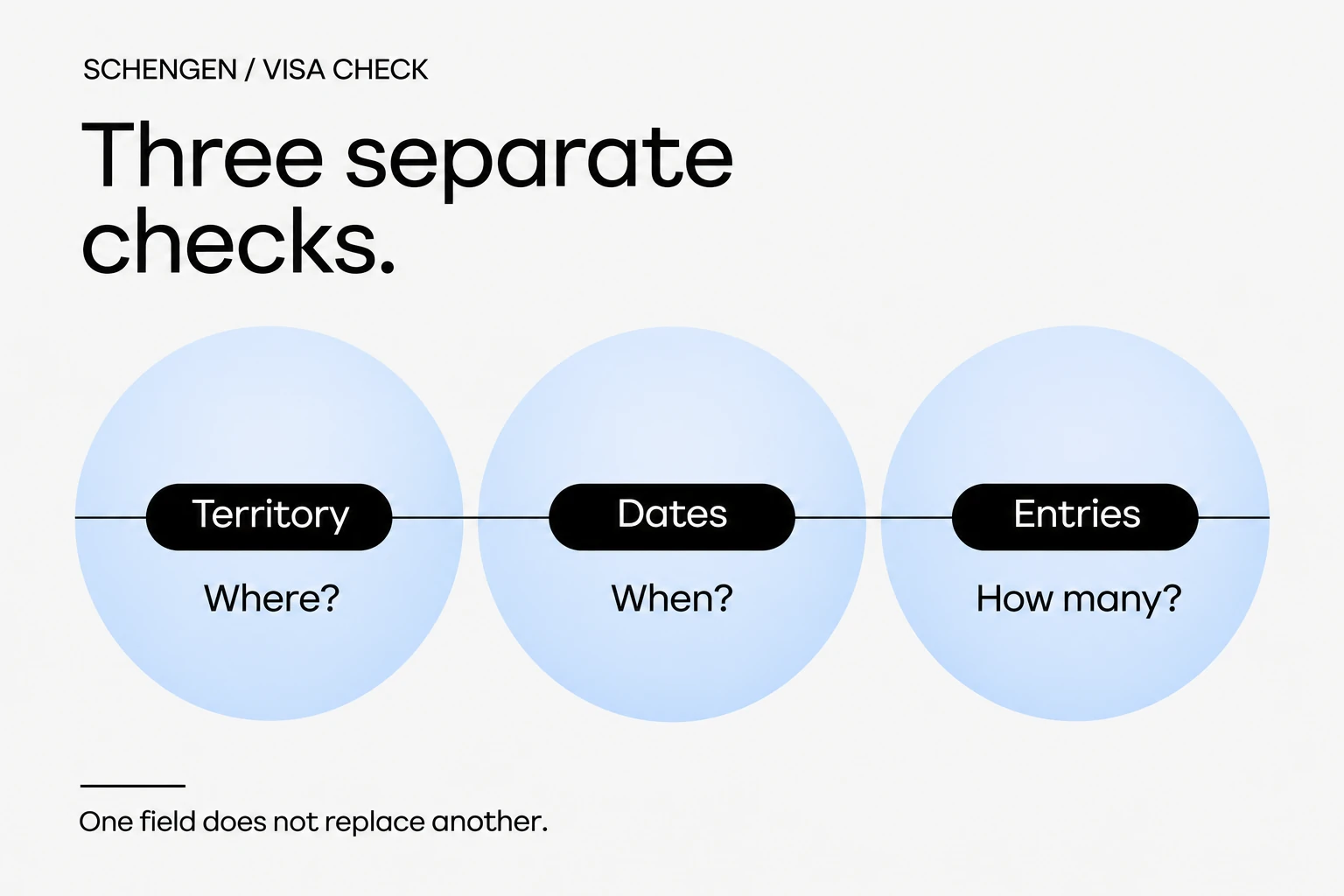
A Schengen visa sticker can be valid beyond the passport’s compliant travel window, or a passport can be valid while the visa has expired. Check four items separately:
- passport issue date;
- passport expiry date;
- visa validity dates and number of entries; and
- the permitted stay shown on the visa, subject to the 90/180 ceiling.
A residence permit or long-stay visa can change the visa-document requirement, but it does not make an unusable passport acceptable for international travel. Contact the responsible consulate if the passport was replaced after the visa was issued.
Children and supporting documents
The European Union guidance says children and minors need their own passport and, when required, their own visa. A parent’s residence in the UAE or another GCC state does not remove a child’s document requirement.
Border officers may also ask for proof of accommodation, an invitation, a return or onward ticket, travel medical insurance or evidence of funds. Those documents support the trip; they do not repair a passport that fails the issue-date or expiry test.
A pre-booking check for GCC residents
Before buying a non-refundable ticket, read the data page and calculate both dates. The safest sequence is to renew a borderline passport first, then apply for the visa in the new document. If biometrics are relevant, our Schengen fingerprint guide explains when prior fingerprints may be reused and when a consulate can still ask for a new capture.
Rules can differ for EU family members, recognised refugees and holders of particular residence documents. The EU page advises travellers to confirm exact requirements with the embassy or consulate of the country they intend to visit. Where an itinerary crosses several Schengen states, use the consulate responsible under the main-destination rules and make sure the passport remains compliant for the entire journey.
The practical lesson is simple but date-sensitive: an unexpired passport is not the complete test. Count back 10 years from entry and forward three months from planned departure, then check the visa and permitted stay separately.
Sources and verification
- European Union Your Europe: travel documents for non-EU nationalseuropa.euSeparate source-check date not recorded
- EUR-Lex: Schengen Borders Code, Article 6eur-lex.europa.euSeparate source-check date not recorded
- Advise Visa: Schengen fingerprint reuse and the 59-month ruleadvisevisa.comSeparate source-check date not recorded
These are the sources cited for this article. Last article update: 14 Nov 2026. Requirements can change and depend on your nationality and circumstances. This article is general information, not a personal eligibility assessment.
Independent, AI-assisted guidance.Read moreRead less
Use this guide to prepare, then confirm the rules with the responsible authority.
- Last verified against all cited sources
- Not recorded
- Named immigration-expert review
- Not recorded · Who produces this guide
An article update date is not a source-verification date. A source check is not a guarantee of eligibility or future accuracy.