
Australia Changes Graduate Visa Family Rules: Apply Together From 13 November
New subclass 485 rules restrict which family members can apply and end separate subsequent-entry applications, with exceptions and earlier-application protections.
In this guide · jump to a section
Australia's new Temporary Graduate visa family rules took effect on 13 November 2026. Eligible partners and children must now apply together with the main subclass 485 applicant; they cannot use a separate subsequent-entrant application to join later. Graduates planning a family move should check eligibility before submitting, even if ImmiAccount lets them enter a relative's details.
What changed, and when?
The Temporary Graduate Visa Reform Regulations were made and registered on 12 November and commenced the following day. Their application provision covers visa applications made from commencement. This is an operative change, not a proposal.
Home Affairs' change notice, updated on 13 November, says applications submitted before that date are assessed under the rules applicable when lodged. It also says the primary applicant's eligibility requirements have not changed. The immediate issue for families is who can make a valid combined application and when.
Which relatives can be included?
For a first Temporary Graduate visa, the department's Post-Higher Education Work instructions preserve a route for the same dependants from the previous Student visa. The relative must currently hold that dependant visa, have held it on 2 October 2026, or have held it within the six months before applying.
A spouse who was never included on the earlier Student visa cannot simply be added through this route. Separate qualifying circumstances may nevertheless allow inclusion.
For a second Temporary Graduate visa, the Second Post-Higher Education Work instructions describe protection for dependants who currently hold, or held within the previous six months, the relevant Temporary Graduate visa.
Exceptions still require a joint application
Home Affairs identifies exceptions for Pacific or ASEAN nationals, graduates who completed a PhD while holding the relevant Student visa, and those whose relevant studies were fully funded by a foreign government. These can allow eligible family members who were not dependants on the earlier visa.
The legislation links the qualification and funding exceptions to the most recent Student visa and the relevant completed doctoral degree or fully government-funded courses. A private scholarship or a family contribution should not be assumed to meet the government-funding test.
Even where an exception applies, the family must apply at the same time as the graduate. The main applicant must be in Australia when applying, while family applicants may be inside or outside Australia. Being resident in Dubai or another GCC city is not itself one of the listed exceptions.
Newborn children have specific provisions
A child born outside Australia after the relevant Student or Temporary Graduate visa grant may qualify for inclusion in the next eligible combined application. The department warns that a newborn overseas cannot simply be added after the Temporary Graduate visa has been granted.
An Australian-born child of a Temporary Graduate visa holder is treated differently: Home Affairs says the child automatically holds the parent's visa as a dependant, but the birth must be reported. Our guide to notifying an Australian visa application about a new baby explains why notification should not be overlooked.
What families should do before submitting
Build a separate timeline for each person: current visa, previous dependant status, relevant grant dates and expiry dates. Match it to the first- or second-visa instructions, then collect relationship evidence and any qualification or government-funding documents supporting an exception.
Do not treat an available form field as permission. Home Affairs warns that ImmiAccount may accept details for an ineligible relative, whose application would be invalid. That can have consequences for lawful status and further applications, especially after an existing visa expires.
For Afghan and GCC-based families, the practical priority is to coordinate the graduate's application in Australia with eligible relatives abroad before paying for travel. The new rule does not guarantee visa approval or replace other subclass requirements. Where a person's immigration history does not fit the published examples, obtain clarification from Home Affairs or a qualified adviser before relying on a joint application.
These graduate-visa changes are separate from the Student visa reforms introduced in October.
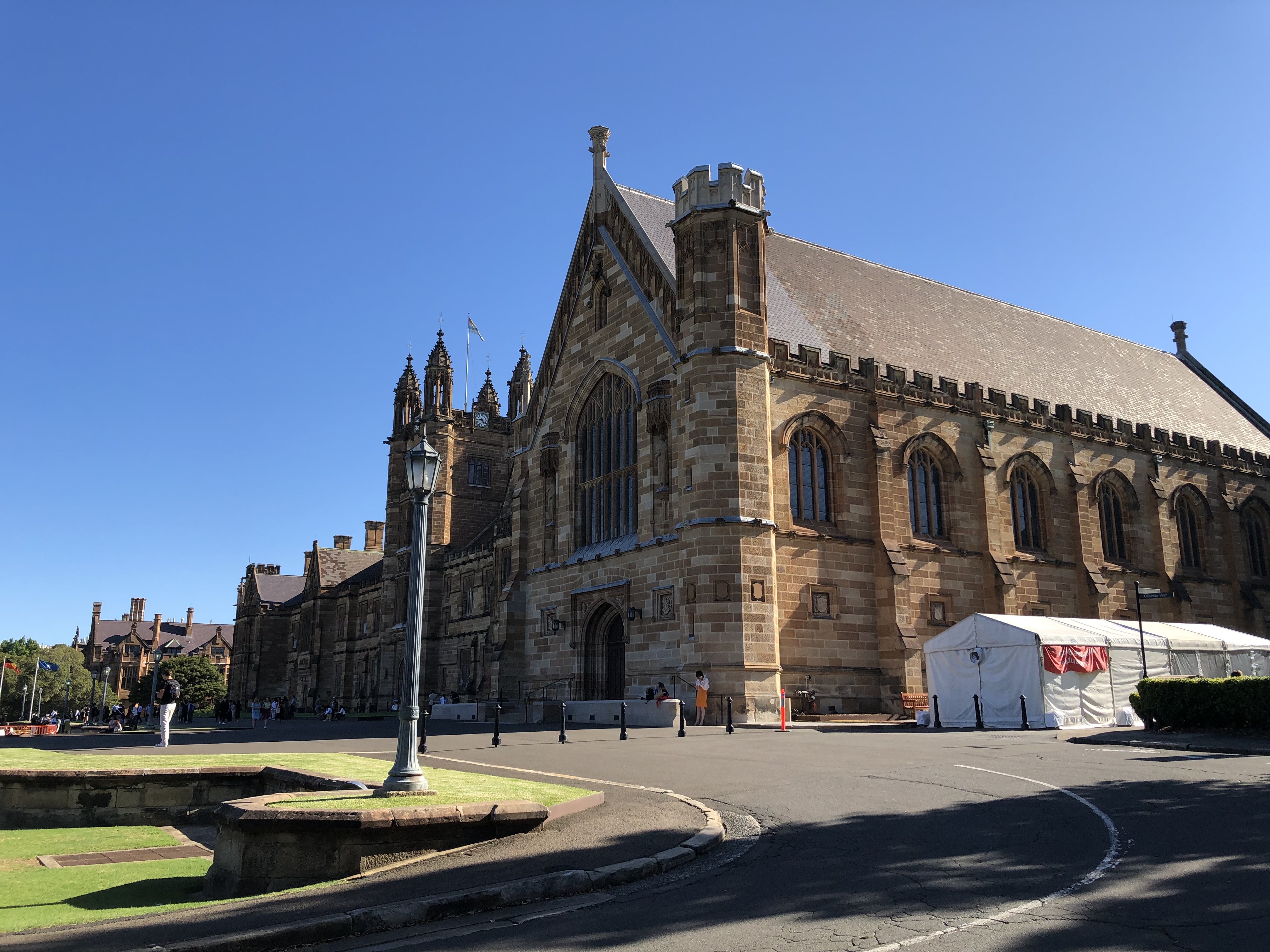
*Image: University of Sydney, photographed by Arewell, CC BY-SA 4.0. Contextual campus photograph from 2019, not a photograph of the policy announcement; original image unchanged.*
Sources and verification
- Home Affairs: subclass 485 family rule changesimmi.homeaffairs.gov.auSeparate source-check date not recorded
- Federal Register: Temporary Graduate Visa Reform Regulations 2026legislation.gov.auSeparate source-check date not recorded
- Home Affairs: Post-Higher Education Work streamimmi.homeaffairs.gov.auSeparate source-check date not recorded
- Home Affairs: Second Post-Higher Education Work streamimmi.homeaffairs.gov.auSeparate source-check date not recorded
These are the sources cited for this article. Last article update: 14 Nov 2026. Requirements can change and depend on your nationality and circumstances. This article is general information, not a personal eligibility assessment.
Independent, AI-assisted guidance.Read moreRead less
Use this guide to prepare, then confirm the rules with the responsible authority.
- Last verified against all cited sources
- Not recorded
- Named immigration-expert review
- Not recorded · Who produces this guide
An article update date is not a source-verification date. A source check is not a guarantee of eligibility or future accuracy.


