
Taking a Child to Canada With One Parent: Build the Permission File Around the Journey
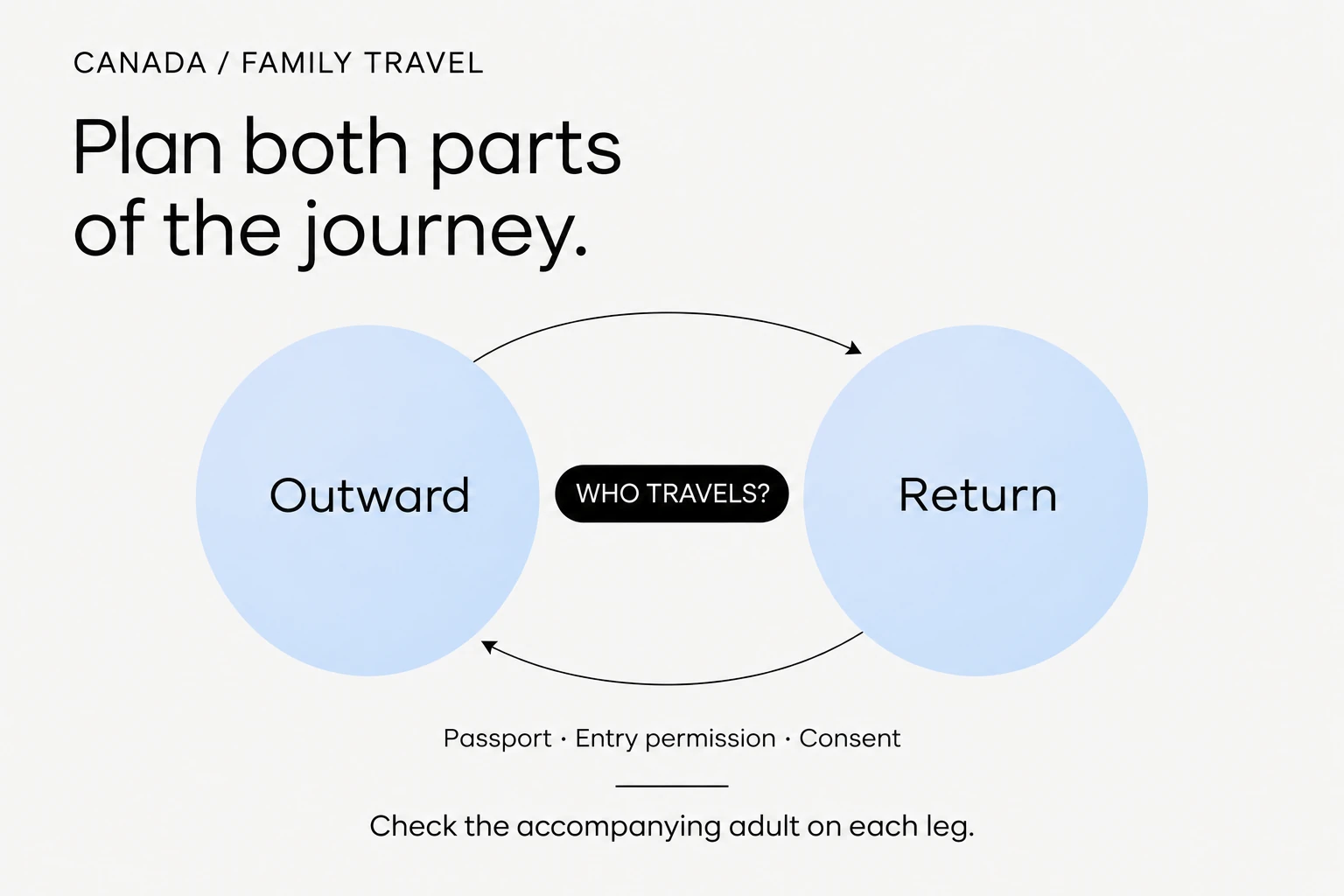
A child’s passport, entry permission and evidence of parental consent answer different questions. Check who accompanies the child on each leg, including the return journey.
In this guide · jump to a section
A child's travel documents should be built around the actual journey, not just the family relationship. One parent may accompany the outward flight while a grandparent brings the child home. A document file prepared only for the first flight can miss that change.
Start by separating three questions: who the child is, what permission the child needs to enter, and whether the accompanying adult has authority for the journey. A passport, visa or electronic travel authorisation does not answer all three by itself.
The Canadian entry guidance
IRCC treats children under 18 as minors for its visitor guidance. For a child travelling with one parent, its preparation list includes the child's own passport, a copy of the birth certificate and an authorisation letter from the parent who is not travelling, with contact and identification details.
The page gives different instructions for separated parents, sole custody, guardianship, adoption and a deceased parent. These distinctions matter. A family should not download a generic letter and assume it substitutes for a relevant court order or proof of guardianship.
IRCC also makes clear that an officer must be satisfied that the child is authorised to travel. A prepared folder helps explain the situation; it does not guarantee admission.
Map each leg before drafting the letter
| Journey stage | Adult travelling with the child | Preparation question |
|---|---|---|
| Flight to Canada | One parent | Whose consent or decision-making evidence is relevant? |
| A side trip | A different adult or group | Does the existing file describe this arrangement? |
| Return journey | Parent, relative or another authorised adult | Do the dates and accompanying person still match? |
This is an original planning table, not a statement that every leg requires an identical form. Add the countries, dates and airline to your own version. Then check the relevant country's entry and exit instructions and the carrier's rules for children.
Why the return trip deserves its own check
Canada's separate guidance for children travelling abroad recommends a signed consent letter where a child travels without one or both parents or legal decision-makers. It explicitly says such a letter is not legally required in Canada, while explaining that officials or airline staff may ask for it and other countries may have their own requirements.
That distinction prevents two opposite mistakes: saying Canada universally mandates one particular letter, or concluding that no one will ask because it is not a Canadian legal requirement. The guidance recommends considering children under 19 for this precaution, a different scope from the under-18 visitor page.
A family-file example
Imagine a child travelling from the Gulf to Canada with their mother and returning with an aunt. The family should identify both arrangements before asking anyone to sign documents. A letter describing only travel with the mother does not clearly explain the aunt's return journey.
Our suggested file index has five lines: the child's identity document; entry permission where applicable; relationship evidence; consent or decision-making documents; and the itinerary with contact details. Mark the applicable document against each line. This index is an organisational aid, not a replacement for the official checklist or a lawyer's advice on a custody dispute.
Where consent is unavailable, unsafe to obtain or contested, do not create a fictional signature or assume that a general template resolves the issue. Canadian guidance directs families to case-specific legal advice in such circumstances. A court order's wording can matter more than the appearance of a polished letter.
Check the official sources below before travel and use our application checklist for the wider trip. We compared published guidance; we have not assessed any individual family's legal authority or interviewed border officials.
Sources and verification
- IRCC: minor children travelling to Canadacanada.caRecorded substantive check: 15 Nov 2026
IRCC distinguishes accompanied and unaccompanied minors. For travel with one parent it lists the child’s passport, birth-certificate copy and a letter from the absent parent with identifying information, with separate guidance for custody, guardianship and death.
- Government of Canada: consent letters for children travelling abroadtravel.gc.caRecorded substantive check: 15 Nov 2026
Canadian travel guidance recommends a consent letter for children travelling without both parents or decision-makers, while expressly saying it is not legally required in Canada. Other countries and carriers may request it; court orders and unsafe or unavailable consent need case-specific consideration.
These are the sources cited for this article. Last article update: 15 Nov 2026. Requirements can change and depend on your nationality and circumstances. This article is general information, not a personal eligibility assessment.
Independent, AI-assisted guidance.Read moreRead less
Use this guide to prepare, then confirm the rules with the responsible authority.
- Last verified against all cited sources
- · Automated source check by Advise Visa AI-assisted source review
- Named immigration-expert review
- Not recorded · Who produces this guide
An article update date is not a source-verification date. A source check is not a guarantee of eligibility or future accuracy.
What this guide adds: An original outward-and-return journey matrix and family-file checklist translate two distinct Canadian guidance pages into a practical preparation process without claiming a universal consent rule. Our original explainers


